
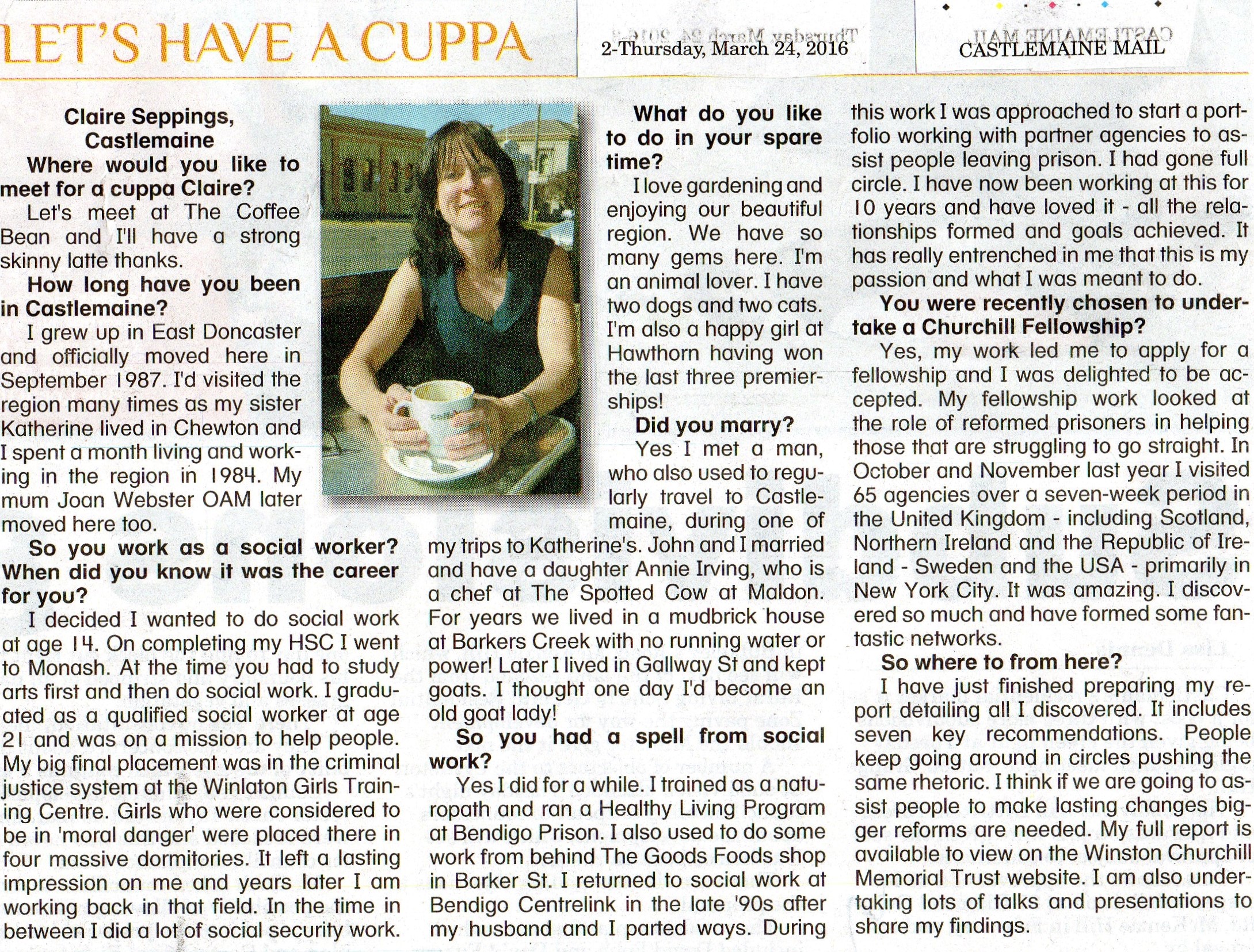
‘Let’s Have a Cuppa’ – Castlemaine Mail 24th March 2016
Many thanks Lisa Dennis and Jeff Jones, Castlemaine Mail
‘Let’s Have a Cuppa’ – Castlemaine Mail 24th March 2016
Many thanks Lisa Dennis and Jeff Jones, Castlemaine Mail
My 2015 Churchill Fellowship report To study the rehabilitative role of ex-prisoners/offenders as peer mentors in Reintegration models is now available on the Winston Churchill Memorial Trust. Claire Seppings Churchill Fellow
The Report summarises the key findings of my seven-week Fellowship investigations in the United Kingdom, Republic of Ireland, Sweden and United States of America and provides the evidence for any jurisdiction in Australia to involve reformed offenders in all aspects of criminal justice reform. By embracing the expert experience of those closest to the problem and valuing reformative success stories, we have the opportunity to improve the lives of many people, their families and community and realise real reform.
I welcome the opportunity to discuss my findings.
Best wishes
Claire

Churchill Fellowship 2015

Real Reform Midland Express 8.12.15
The final week of my Churchill Fellowship trip in the United States of America, in New York City was the perfect end to an incredibly inspiring fact finding journey. Criminal Justice reform is well underway across the country and I was extremely privileged to visit and meet with many agencies at the forefront of this vital change. My week took me across New York City, from Midtown to Downtown, from Harlem to the Bronx and over to Brooklyn. Travelling to the US and New York City was also a special time for me personally as I had been there 30 years before and still have my photo of the Twin Towers taken from the Empire State Building. This was also then a time for me to relive memories, explore what I had not seen and pay my deepest respects at Ground Zero.

Central Park
My first day involved speaking on the phone with Nicole Jarrett, from the Council of State Governments Justice Center, a national nonprofit organization that serves policymakers at the local, state, and federal levels from all branches of government. It was wonderful to speak with Nicole on a warm sunny Autumn day while sitting in Central Park amongst bright autumn leaves. Nicole provided me with a wealth of information about the federally funded Mentoring Programs under the Second Chance Act.
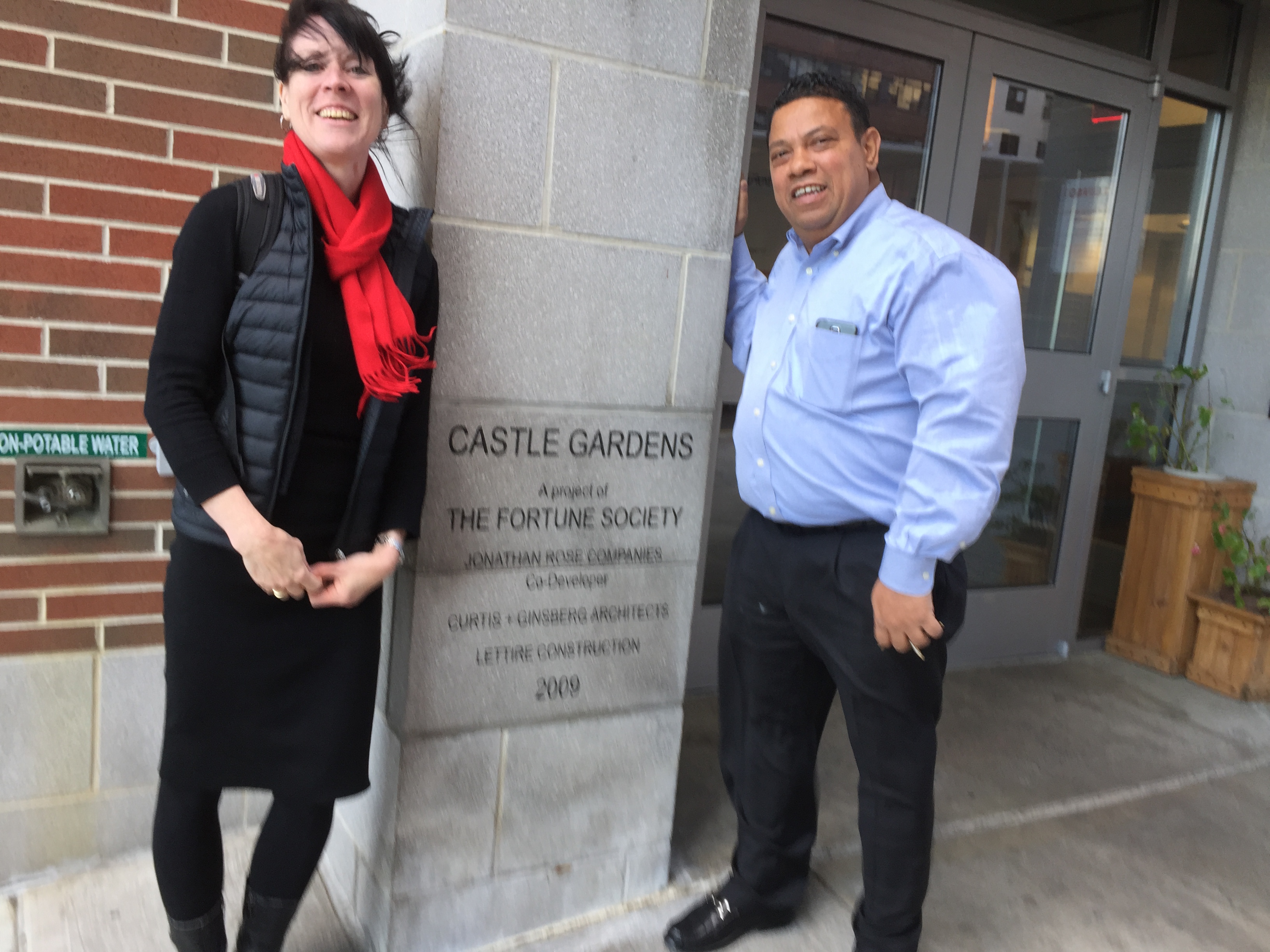
The Fortune Society 140th Street NYC
I then walked the length of Central Park towards 140th Street to meet with the Fortune Society. The Fortune Society’s mission is to support successful reentry from prison and promote alternatives to incarceration, thus strengthening the fabric of local communities. I met with Max Lindeman, Senior Director of Housing, at the Academy, the Fortune Society location in 140th Street, who provided me with the history of the Society, the formation of all the services and their future plans. We had a great discussion about prison reform. Max, a former prisoner has a master’s degree in social work and is working toward a Ph.D.

Columbia Law School NYC
Later that Friday afternoon I had a very exciting meeting with Professor Susan Sturm, George M. Jaffin Professor of Law and Social Responsibility and the founding director of the Center for Institutional and Social Change at Columbia Law School. I encourage you to read about her work and focus. In relation to my project, Susan discussed the importance on making education central for communities affected by the justice system. Education helps people move forward to something rather than just stopping doing something. Education helps shift the identity of a person as a prisoner or person with convictions to a person as a student. Susan collaborates with a wide variety of higher education and community based organizations and networks involved in initiatives aimed at increasing full participation, including JustLeadershipUSA and the New York Reentry Education Network.
My last few days before flying home were wonderful and so inspiring. Early Monday morning I headed back to Harlem and to the Bronx this time by the Subway. First up I had a great morning with Lynnae Brown, Director with Howie the Harp Advocacy Center, learning all about the history of the service and the well established peer mentoring education programs. Howie the Harp Advocacy Center (HTH), is a peer-run program, that prepares people in mental health recovery to work as Peer Providers in Human Services. Participants have a mental health diagnosis and many have diverse experiences and co-experiences such as a history of incarceration and/or homelessness.

Howie The Harp Advocacy Center, Harlem

Exodus Transitional Community Inc. Harlem
I then walked to East Harlem to meet with Exodus Transitional Community Inc. The Welcome Home sign above the stairway entrance said it all. Exodus is about ‘Changing Lives and Restoring Hope’ to formerly incarcerated men and women in order to help them successfully and meaningfully reintegrate into their communities.

Exodus Transitional Community Inc.
It was an honour and privilege to meet Julio Medina, a former prisoner, who founded the organisation in 1999. Ramon Caba, also former prisoner, now Program Manager with Exodus provided me with a wealth of information on the broad range of services, including ARCHES, a Transformative Mentoring program for 16 to 24-year-olds on probation. We had a great discussion on Exodus’ policy advocacy work and prison reform. Then after a delicious turkey sandwich made for me at the center I headed back to the Subway to catch the train to the Bronx.

Exodus Transitional Community Inc.
A short walk along Westchester Avenue, I found the Osborne Association and noticed it was surrounded by people queuing from one length to the other. I learned inside they were queuing for food assistance being provided by local sports identities. I had a wonderful meeting with Andre Ward, Director of Workplace Development who oversees the ARCHES and NextSTEPS mentoring programs; Siddiq Najee, Program Coordinator and Mia Legaspi-Cavin, Mentoring Program Manager. The range of services established within and delivered by the Osborne Association are incredible and again testimony that our way forward in Australian rehabilitation and reintegration programs is to acknowledge and embrace the expertise of former prisoners in the establishment, management and delivery of these programs. Both Andre and Siddiq have histories of lengthy periods of incarceration and it was a privilege to have such an in-depth, inspiring and informative discussion with them. I encourage you to look at their website.
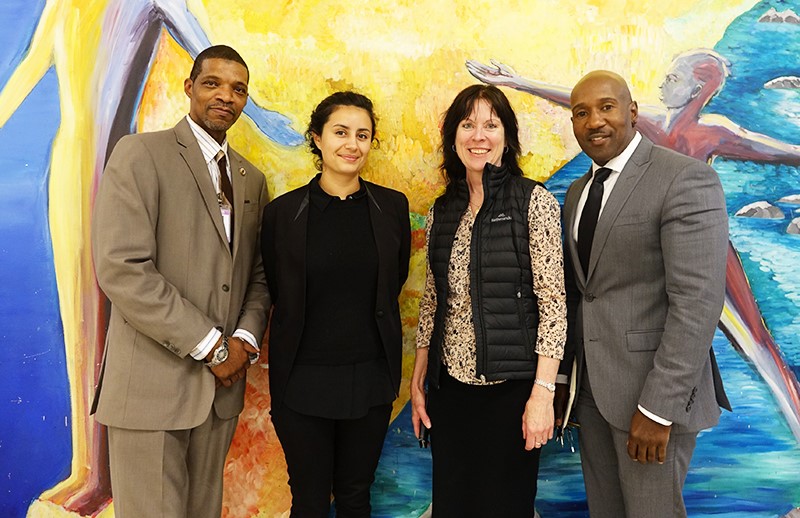
My amazing Monday in New York City was not over. I was thrilled to have made contact while on my trip with Professor Shadd Maruna, is Dean of the School of Criminal Justice at Rutgers University Newark. I was overjoyed that while Shadd had been out of the country he was able to meet with me on the day of his return. We had a wonderful discussion over dinner and drinks at Stout NYC on West 33rd Street, located in the heart of midtown Manhattan. Shadd Maruna and Fergus McNeill have spent the better part of their careers asking questions about “desistance”, why and how people transition out of crime. Fergus McNeill is the professor of criminology and social work at the University of Glasgow. In their latest project, along with Steve Farrall (at the University of Sheffield) and Claire Lightowler (of the Institute for Research and Innovation in Social Services) they collaborated with former prisoners to tell the story of desistance with those who are actively engaging in the process. Their documentary film,’The Road from Crime’, is a “co-production” with Allan Weaver, a Scottish “ex-offender” turned probation officer (and author of the book So You Think You Know Me?) documenting his journey to understand his own process of desistance and those of others like him. I was so thrilled to have met Shadd and have a kindred spirit discussion on social justice, prison reform and recognising the value of ex-offenders expertise in policy reform.

Red Hook Community Justice Center
Tuesday then took me to Brooklyn. Subway train and short walk to the Red Hook Community Justice Center, a multi-jurisdictional community court, located in the heart of a geographically and socially isolated neighbourhood in southwest Brooklyn. I met with Viviana Gordon, Deputy Director, Red Hook Community Justice Center who provided me with an overview of the Center for Court Innovation and the Red Hook Community Justice Center Model; including community engagement and alternatives to incarceration; a tour of the facility and the unique opportunity to sit in the courtroom, next to Judge Alex Calabrese. Judge Alex Calabrese, the presiding judge at the Red Hook Community Justice Center discussed with me the nature of the cases in front of him, the reasons for his decisions and the role of court based social workers. I saw first-hand the positive difference the egalitarian person centred approach can make for those involved in the court proceedings, through the simple gesture of defendants offered options for suitable court return dates and Judge Calabrese sitting at eye level in the courtroom and shaking the hand of many defendants. It was interesting to observe the trend of countless case dismissals for fines issued to people overstaying in the local park after closure and Judge Calabrese advising me that he regularly meets stakeholders to address policy and system issues. I also had the opportunity to learn about Red Hook’s Youth Court that involves the use of peers and observe the Peacemaker Program in court presenting a positive outcome to Judge Calabrese on an assault case before him.

SOS (Save Our Streets) Brooklyn
It was then a mad dash to the bus, many thanks to Viviana for flagging it to wait for me so I could make my way from Red Hook to the Crown Height Mediation Center in Brooklyn. It was a bus and subway train to Kingston Avenue Brooklyn and when I walked up from the subway onto Eastern Parkway, I noticed the visible Jewish culture through the traditional dress. Down a couple of blocks I found the Crown Height Mediation Center, SOS Save Our Streets Program, and had another most amazing meetings of my trip. It was an honour and a lifetime experience to meet with Craig, Rudy, and other members of the team. I learnt how the Center began in response to the 1991 Brooklyn Riots. S.O.S. Crown Heights works closely with local organizations, neighbourhood churches and pastors, community residents and the individuals most likely to commit a shooting. I heard about how the staff of S.O.S. Crown Heights prevent gun violence from occurring in the S.O.S. catchment area in Crown Heights by mediating conflicts that may end in gun violence and acting as peer counsellors to men and women who are at risk of perpetrating or being victimized by violence. The “Credible Messengers” they are says it all. These amazing insightful people have many years’ crime and prison experience behind them and have the credibility within the community and with the youth at risk to make the difference, to provide the powerful visible and public message against gun violence, articulating that shooting is an unacceptable behaviour and leads to a tragic journey for all.

New York City Probation
My final day, in fact my final morning in New York City, in the US and of my whole trip before the 21-hour flight home to Melbourne was heading down to Beaver Street, near Wall Street to meet Assistant Commissioner Lisa Frost with the New York City Department of Probation. It was the perfect meeting to end my trip and music to my ears to hear all that Lisa was about to tell me. Vital criminal justice reform is underway across the US and in particular New York City. There is unprecedented widespread collaboration with the community and a range of innovative funded programs; including AIM (Advocate Intervene Mentor) and ARCHES a transformative mentoring program, both having mentors who are people with former convictions. The NYC Department of Probation works closely with programs such as SOS Save Our Streets, highly valuing the role and work of the ‘credible messengers’. The department is collaborating with many ‘people who have been in the trenches’ and is seeing the benefits ex-offenders, through the inspiring change in them being passed onto others. Feeling so happy to have had such a wonderful final meeting and with a US government department, my trip to JFK International Airport and the flight home to my beautiful daughter Annie Irving waiting to meet me at Melbourne Airport, all went so smoothly – like magic.
I have learnt so much across all the countries and cities I have visited in the last seven weeks. By recognising the value that people with lived prison experience can bring to policies and services, and to their own profession, agencies in all the countries I visited have been able to bring positive reform to their criminal justice systems. By following their example, we can do this in Australia. The rate of recidivism in Australia is causing an ongoing and ever increasing burden on the taxpayer, risk to the community and disengagement of people from society. We now have the opportunity to reduce it. By believing in rehabilitation, restoration, reformation, desistance and recovery, we have the opportunity to improve the lives of many people, their families and community. Moreover and more significantly, to demonstrate that our prison system believes in the outcomes it is funded to achieve. It is time Australia. To recognise and celebrate the success stories and embrace the value of the expertise and commitment of those who have succeeded in desisting and recovering to help others find their personal success and help inform policy that will make a difference – a real personal and community difference.
My deepest heartfelt thanks to everyone who has helped me achieve this Churchill Fellowship honour, undertake this amazing life changing travel and project experience. I have felt inspired and honoured every step of the way and feel eternally grateful to everyone who met with me, gave me so much of their time and shared their expertise. In addition, thank you to those supporting me and the project into the future to help realise the reform we need in Australia. Exciting times ahead indeed! Stay tuned for my Churchill Fellowship Project Report that will be published on the Winston Churchill Memorial Trust website in the new year. In the meantime, please feel free to contact me for any further information.
To see more photos from my time in New York City, feel free to visit here: https://onedrive.live.com/?v=photos&id=6DA3E54D5BEDF625%217951&cid=6DA3E54D5BEDF625&group=0

KRIS, Stockholm, Sweden
It was a vision and dream come true to visit Sweden to meet with KRIS in Stockholm. KRIS was established several years ago by former criminals and drug addicts to help people in prison returning to society turn their lives around from one of addiction and criminality as they had done.

KRIS
KRIS had been an inspiration for my Churchill Fellowship Project. I had become aware that current rehabilitation and reintegration models were not being successful in reducing the risk of further victims in the community or reducing the costs of the criminal justice system to the taxpayer. I also had the catalsyt lived experience of a former partner’s return to prison tell me that he ‘did not know how to be straight’, to live a ‘normal life’, no matter how many mandated prison programs he repeated. KRIS appeared to be the missing link we needed in Australia and my thoughts were affirmed and inspired.
I met with Christer Karlsson, one of the founders of KRIS and now Chairman of KRIS globally and Ali Reunanen, the Chairman of KRIS in Stockholm. I had the most wonderful, inspirational discussion with Christer and Ali and felt privileged to meet with them. Both Christer and Ali have many years of past prison experience and drug addiction and have become experts by experience and become highly respected professionals in their field. I also had a priceless opportunity to sit in with the morning group meeting where KRIS clients share thoughts and feelings on how their previous day went and what they learned about themselves. The services by KRIS both in prison and the community are extensive. KRIS is now based across Sweden and in Finland, Denmark, Ukraine, Belarus and Japan.

X-CONS Stockholm Sweden
I then had the very valuable opportunity of visiting X-CONS, an agency established by the other founder of KRIS, Peter Soderlund. I spent several hours at X-CONS too and spoke with two peer mentors, one a woman who shared with me her past experiences and how she came to be involved with the criminal justice system and now X-CONS. It was a very insightful and moving discussion and again reminded me of the very different, complex and challenging issues and experiences for women involved in addiction and criminality. I also learnt about the range of services provided by X-CONS mentors and observed many people visiting X-CONS while I was there, to either ‘drop-in’ for a coffee to access the services there, such as education, training and job search on computers.
I then sat down and had a lengthy thought provoking and very interesting discussion with Peter Soderlund, about what is needed in society to bring about real social justice and prison reform at the grassroots and person centred level. X-CONS is also based in Canada and Norway.

X-CONS Sweden
A key point on the value of agencies like X-CONS and KRIS is that a person may stop taking drugs, but they also need to stop being a criminal and that means to stop being who they are, in essence, ending the life they have known. This can only come from transformation within oneself and it is through the hope and inspiration of seeing former criminals and drug addicts become leaders of agencies, that provide person centred not service driven support, employing other former offenders and influencing and driving reform. This is where and how real change can happen.
My Churchill Fellowship has been everything I had envisaged and more. It is so exciting to know I have so much valuable information to bring home to Australia and share with other interested countries.
Next week, my final week is the USA, in New York City. Stay tuned.

U-Casadh and Waterford Institute of Technology
My Churchill Fellowship trip to the Republic of Ireland during my fifth week of travels was wonderful. The trip took me to various parts of Ireland, including Dublin, Tipperary, Waterford and Cork. I had the incredible opportunity to revisit an ancestral home and towns, learn more about the history of the counties, the current Irish political, economic and social context that the Irish live in and where the justice system fits in with that.
My first meeting day involved meeting Niall Walsh, an ex-offender with an incredible story of his journey into and through the justice system and his life since then which has seen him become a criminologist and teacher with the Pathways Project, a post release education centre for prisoners in Dublin. Niall is also the first ex-offender to be on the Irish Penal Reform Trust Board. Niall also convenes and coordinates bi-annual expos in Mountjoy prison involving other successful ex-offenders providing prisoners with the opportunity to learn from and be inspired by their success in education and employment.

Pathways Project Dublin
I then had a very lively and interesting meeting with John Costello, Chairman of the Irish Parole Board over lunch, followed by a lovely meeting with Mary Davis, Policy and Communications Officer from Le Cheile Mentoring and Youth Justice Support Services. Le Cheile is doing fantastic work with young people involved with the youth justice system and their families, placing the focus on restoring family relationships and also providing parents with their own mentor to help this. Le Cheile works closely with many other services along with probation and social work students from whom they receive referrals.
After my weekend trip to Tipperary, I had the opportunity to visit Mountjoy Prison in Dublin. Ray Murray from the Care and Rehabilitation Directorate in Irish Prison Headquarters, introduced me to the Head teacher in the Dorcas Centre for women, Cathy O’Flatherty and Head teacher for the Mountjoy male prison, Ciaran Leonard. Cathy took me around to meet all the women in their classes, telling them about my project and asking what they thought. It was interesting to receive their initial positive response to the idea of having a successful former female prisoner mentor them, though they could not picture themselves returning to the prison to do this at this stage. The visit and discussion with Cathy and the women certainly reminded me of the personal challenging issues facing women who end up in prison and the complexities once released which are further compounded by the lack of positive supportive relationships in their life.

Stephen Plunkett U-Casadh
I then travelled down to Waterford and Cork to meet with Jonathan Cullerton, from the Waterford Institute of Technology (WIT), Stephen Plunkett from U-Casadh and Sheila Connolly with the Cork Alliance Centre. Jonathan, Lecturer in Sociology and Criminal Justice Studies introduced me to Stephen Plunkett, founder of U-Casadh and a former prison officer and we all had a very invigorating, inspiring, interesting discussion. U-Casadh is an innovative and inspiring social inclusion project and registered charity and their mission is to be a catalyst for change in attitudes to crime, social exclusion, rehabilitation and justice. Jonathan then took me to meet some of his criminology students at WIT to speak to them about my project and have engaging discussion on all things justice, which we did.

Cork Alliance Centre
It was delightful to meet Sheila Connolly and her team at the Cork Alliance Centre. The Cork Alliance Centre is another innovative and inspiring service, with services developed and based on the input from service users and focuses on the Choice for Change. The Cork Alliance Centre’s relationship with it’s service users is based on a collaborative partnership approach rather than an expert-recipient model. We had a wonderful, interesting and informative discussion.

Irish Penal Reform Trust
My last day in the Republic of Ireland was back in Dublin meeting with Fiona Ni Chinneide, Deputy Executive Director of the Irish Penal Reform Trust (IPRT) and Gerry McNally, Deputy Director of the Irish Probation Service. It was wonderful to meet Fiona and learn about the work of the IPRT, especially given my deep interest and passion for prison reform and also that the IPRT made Niall Walsh, an ex-offender, ‘expert by experience’ a member of their Board. It was inspiring to learn about the work of the IPRT, responding to government policies through submissions and initiating their own research and policy reform, many of which have been adopted.

Irish Probation Service
It was great to finally meet Gerry McNally, Deputy Director of the Irish Probation Service. We had a great discussion about the Irish justice system, the various programs,initiatives and collaborative research and discussion papers published for the Irish Probation Service and the collaborative work with Northern Ireland and across Europe. Gerry introduced me to staff from the Community Return Program and IASIO (Irish Association for the Social Integration of Offenders). Community Return is a partnership between the Irish Prison Service and Irish Probation Service with staff working together in the Probation headquarters. IASIO is in partnership with both the prison and probation services providing the Linkage Service (education, training and employment), the Prison Gate Service and the Resettlement Service. A great finish to my Churchill Fellowship trip to the Republic of Ireland and Eire.
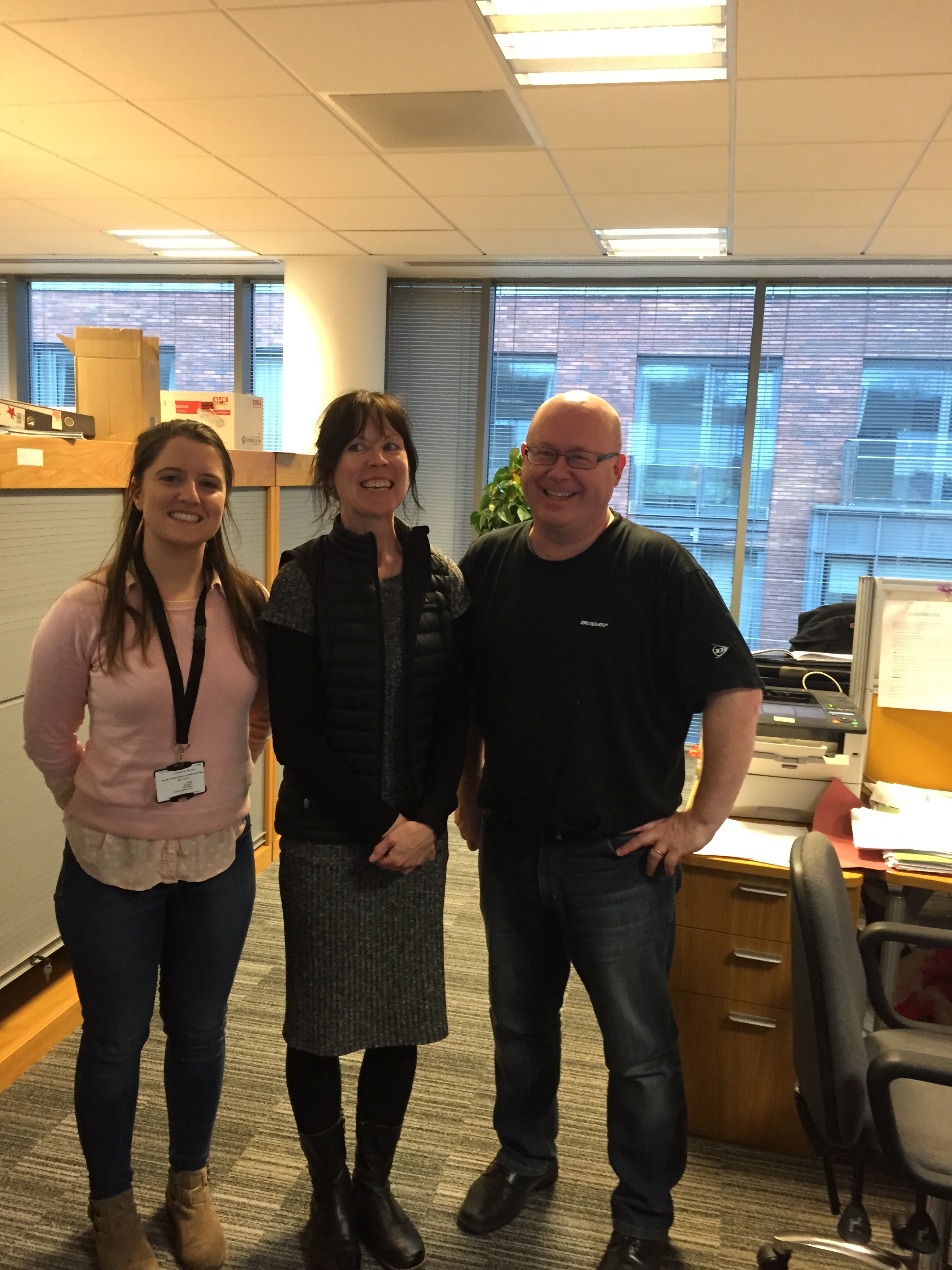
Community Return Program
Nest week Stockholm, Sweden.
For more photos from my week in Ireland, please follow this link: https://onedrive.live.com/?id=6DA3E54D5BEDF625%217200&cid=6DA3E54D5BEDF625&group=0&v=photos

Northern Ireland Prison Service
Visiting Northern Ireland was a dream come true for me. I had a long standing interest in the history of the Troubles from when I was a Social Work student at Monash University and would read books on these at length. It was 1982 then. My Churchill Fellowship visit was then everything and more I had dreamed of due to the amazing meeting schedule Lesley Mason from the Northern Ireland Prison Service Rehabilitation team arranged for me over two days in Belfast.

Start360 Northern Ireland
On the first day of meetings in Belfast I met with an agency I had prearranged – Start360. Zoe from Start360 also arranged a great day for me, meeting with their CEO Anne-Marie and Ronan, manager of their Justice Services. Start360 delivers a range of person-centred services to young people, adults, families and communities across Northern Ireland. I learnt a lot from them about the political context they work within now after the Troubles and where justice fits in with that. Anne-Marie also told me the tale of Stephen. Stephen’s story is very thought provoking covering a journey through being in care and then prison. Stephen is now a volunteer at Start360.
That night I had the wonderful opportunity to have dinner with a fellow 2015 Winston Churchill Memorial Trust recipient, Amanda Wood, who works for the Northern Ireland Prison Service and just returned from her trip which was to Australia,
The next two days with Lesley were amazing and have provided me with a wealth of information for my project. Christine Hunter from Probation, also a Churchill Fellow, told me about their Reset Project. Lunch at Hydebank Wood correctional facility was an honour, as it involved me meeting with Sue McAlister, Director General of the Northern Ireland Prison Service, and Brian McCaughey, Director of Rehabilitation and Austin Treacy the Govenor at Hydebank. Great innovation underway at Hydebank under Austin, now calling the centre a College and changing the word ‘prisoner’ to ‘student’ and conducting many meetings including ones with community agencies in Hydebank’s cafe that is operated by the students While we were there, Lesley then took me to meet with Jackie from Turning Pages a reading program similar to the Shannon Trust ‘prisoner helping prisoner’ reading program. Later that day, Osmond from Community Support and David from the Quaker Connections came in to meet with us. Two very valuable programs involving volunteers and mentors helping prisoners pre and post release.

NIACRO – Northern Ireland
My final day of meetings in Belfast took me to Maghaberry Prison, a modern high security male prison where I met with Willie Gribben from Resettlement Services, based at the prison rather than headquarters to be closer to the work. We had a great chat early in the morning. Lesley then took me onto a prison wing where the Family Matters program is operated in partnership with Barnardos. I spoke with John a Prison Officer who has been involved from the start. John had me glued to his every word as his account of the service was captivating and inspiring. So inspiring when he said the program places the family first not the prisoner, as it requires positive healthy families to make the post release prisoner resettlement experience effective and sustainable.
Lesley and I then met with the Listeners, prisoners trained by the Samaritans to support prisoners struggling with mental health concerns needing a peer to talk to. The aim of the program is to reduce the incidence of suicide in prison. It was a great meeting with a group of about ten listeners as we also chatted about their thoughts on prisoner rehabilitation, peer mentoring and post release experiences and issues that lead to reoffending. We then met with Brenda from Housing Rights who works in the prison and has trained prisoner peer mentors to help the service identify, support and assist any prisoner who comes into prison needing help to prevent them losing their accommodation in the community. These guys very articulate and enjoying their peer mentor role in the prison, feeling it is so worthwhile with one of then also being able to continue this volunteer work post release.
Back to Hydebank Wood’s cafe for lunch to have one of the most significant and amazing meetings I have had. Two Restorative Justice programs, Alternatives Northern Ireland and Community Restorative Justice developed and run by two men with profound experience in the justice system and the Troubles. Lesley and I then headed back into Belfast City to meet with Gareth Eannetta at Niacro. Niacro is the Northern Ireland Association for the Care and Resettlement of Offenders. Gareth took me straight to meet with Mairead and the peer mentors, all now volunteers since funding dried up, but due to their belief in the benefits of what they are doing to help Niacro clients they continue to provide the service in their own time. The support ranges from practical help, to help with music, reading and IT.
My life changing time in Belfast and Northern Ireland was topped off by drinks with Lesley, Brian and Louise from the Northern Ireland Prison Service in the Europa hotel, the hotel bombed 54 times during the Troubles. Their services have come a long way and doing wonderful innovative and inspiring work and as a part of this innovation also seeing the value of incorporating the views and services of the ‘experts by experience’.
My third week into my Churchill Fellowship trip in Scotland was so interesting and once again, the agencies I had arranged to meet with so helpful and informative and their work so valuable for my project.
The first day took me out to HMP Low Moss in Bishopbriggs, Glasgow, a male prison opened in 2012 with a capacity of 784. I met with Gillian Todd, the Turning Point Partnership Manager and her team. What is so exciting is this service based within the prison is a public/social partnership and provides a complete holistic through care service for prisoners and their families. The team works very closely with the prison staff and other visiting agencies. It is a voluntary service but all prisoners who arrive are offered the service through a group information session. Those who wish to be assisted, and will be released around Glasgow, will continue to receive post release support starting on the day of release at the Gate. The team will take them to appointments, visit them, and take calls from the client and their family if needed for as long as required. The team does not have peers mentors, but engages with the prison’s peers and other services who provide mentoring. What was so exciting about this service is that it is breaking down the prison/community barrier.
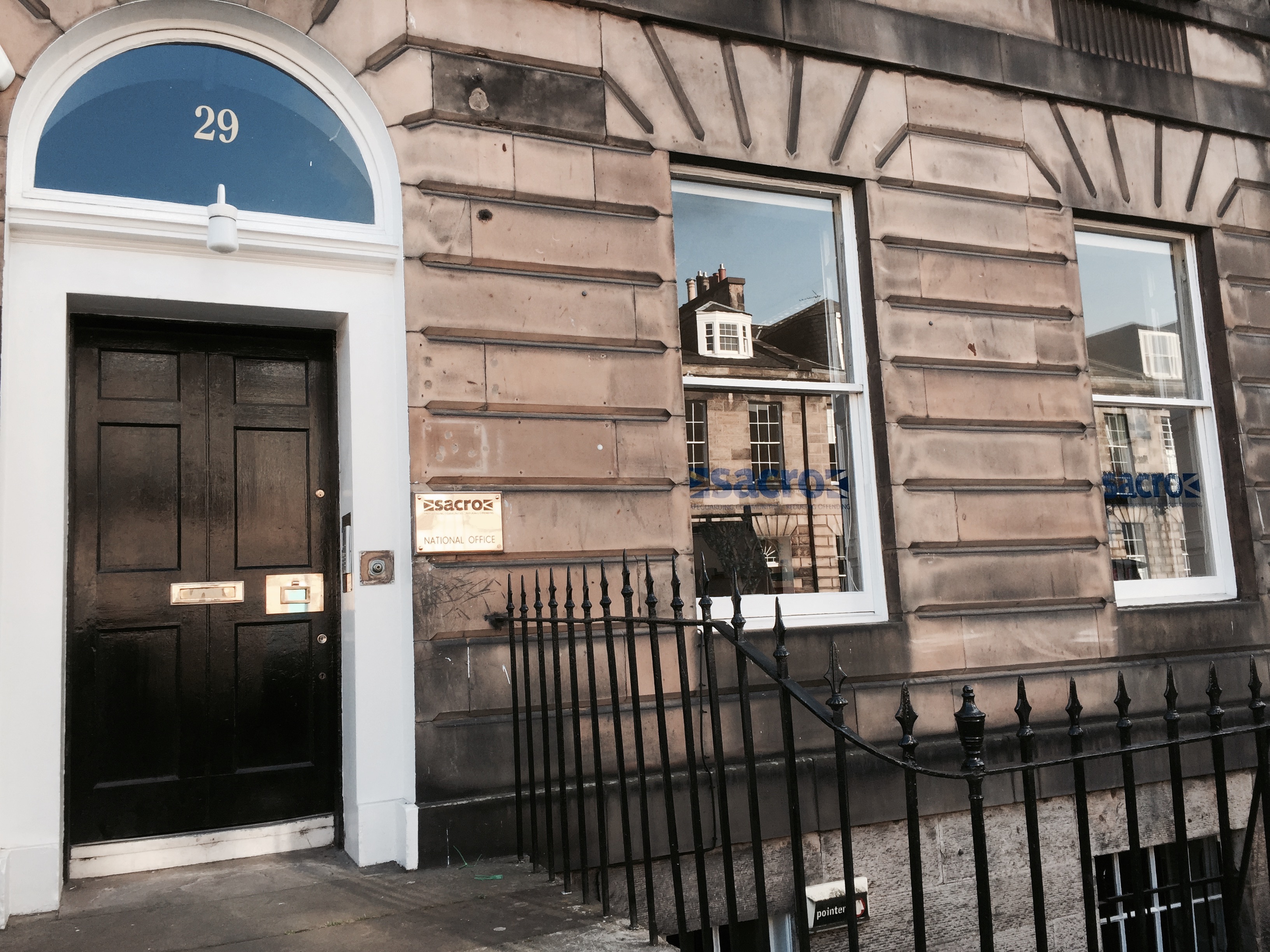
Sacro National office, Edinburgh
The next day I met with Yvonne and Adele at Sacro’s national office in Edinburgh and learnt a lot about the history of their service and how the Shine Women’s Mentoring program came into practice following reports into women in prison. Adele provided a wealth of information about the service based within the female prisons and community; and the recruitment, training and support of prison champions and mentors . The mentoring does not involve the use of peers but is very established and proving to be successful in helping many women after release.
I then met with Professor Bill Whyte, at Edinburgh University and with another of his colleagues Dr. Steve Kirkwood and PhD Student Eve Mullins. We had a very robust interesting discussion on the Scottish criminal justice system and peer mentoring. Bill conducted research into the Wise Group’s first Routes Out of Prison mentoring service.
Later in the day I was thrilled to meet Pete White, Chief Executive of Positive Prison ? Positive Futures who came from Glasgow to meet me in Edinburgh. Pete is an ex-offender with an amazing story who is now very much involved with having input into policy and contribution to research. Some of the work has involved replacing the use of the term ‘ex-offender’ to ‘people with convictions’ in all government papers and incorporating ‘returning citizens perspectives’. Pete’s organisation is based in the Robertson Trust building in Glasgow. Pete is an inspiration.
The next day, back in Glasgow, I met with Tom Jackson, Chief Officer with the Glasgow Community Justice Authority. Tom provided me with a comprehensive overview of the Scottish criminal justice system, structure and services; current changes and challenges and also innovative programs such as the PSP’s (Public Social Partnerships), the value of mentoring and the recognition of incorporating input from former service users in policy development and reform.
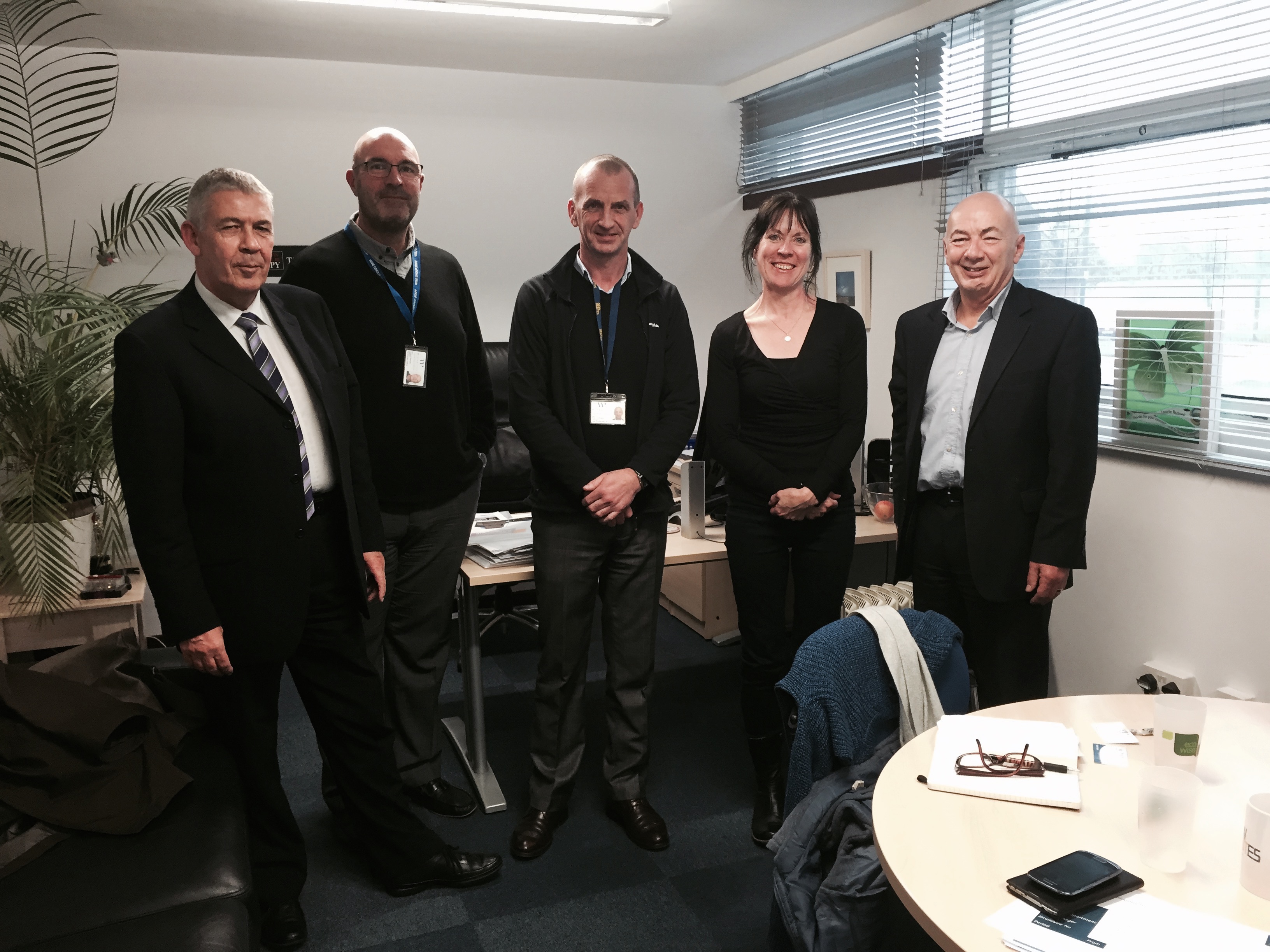
The Wise Group – New Routes
I then met with the Wise Group’s New Routes team, formerly New Routes Out of Prison. I met with Laurie Russell the Director and also Charlie, Alex and Joe, members of the team who are mentors and all ex-offenders. These guys were amazing and a delight. Filled with so much valuable insight, experience, anecdotes and case studies, and quite a few laughs. New Routes is well established and provides mentoring services to nearly all Scottish male prisons, with the mentors with previous convictions able to commence the mentoring relationship with the prisoner well prior to release and continuing well into their time in the community. New Routes has over five years of learnings. New Routes recruits for other positions in the agency from within the mentoring service, recruiting for attitude and knowing the values and ethos of the agency. Many of the quotes the guys gave me in relation to mentoring prisoners were gold, including this one; ‘I don’t look for an outcome and then I find one’.

The Robertson Trust, Glasgow
My final day in Scotland was in Glasgow meeting with Christine Scullion, Head of Development with the Robertson Trust. The Robertson Trust aims to improve life in Scotland for those who need it most through providing funding to charitable organisations. It was a thoroughly delightful, informative and very interesting discussion learning about the various programs and agencies they have funded related to my Churchill Fellowship project – very exciting.
So now onto two weeks across the continent of Ireland, starting the first week in Belfast, Northern Ireland. Stay tuned.
My final week in England was amazing and reinforced the inspiration and key messages gained from Week One. Inspire – Empower – Change – Refresh – Inspire – Empower – Change. My inspiration comes from seeing and meeting with so many agencies across England who have this as the ethos underpinning their organisations. It doesn’t matter where the funding comes from. The ethos is the same. This ethos believes in ‘experts by experience’ and the service user being involved and progressing to all levels of the service.
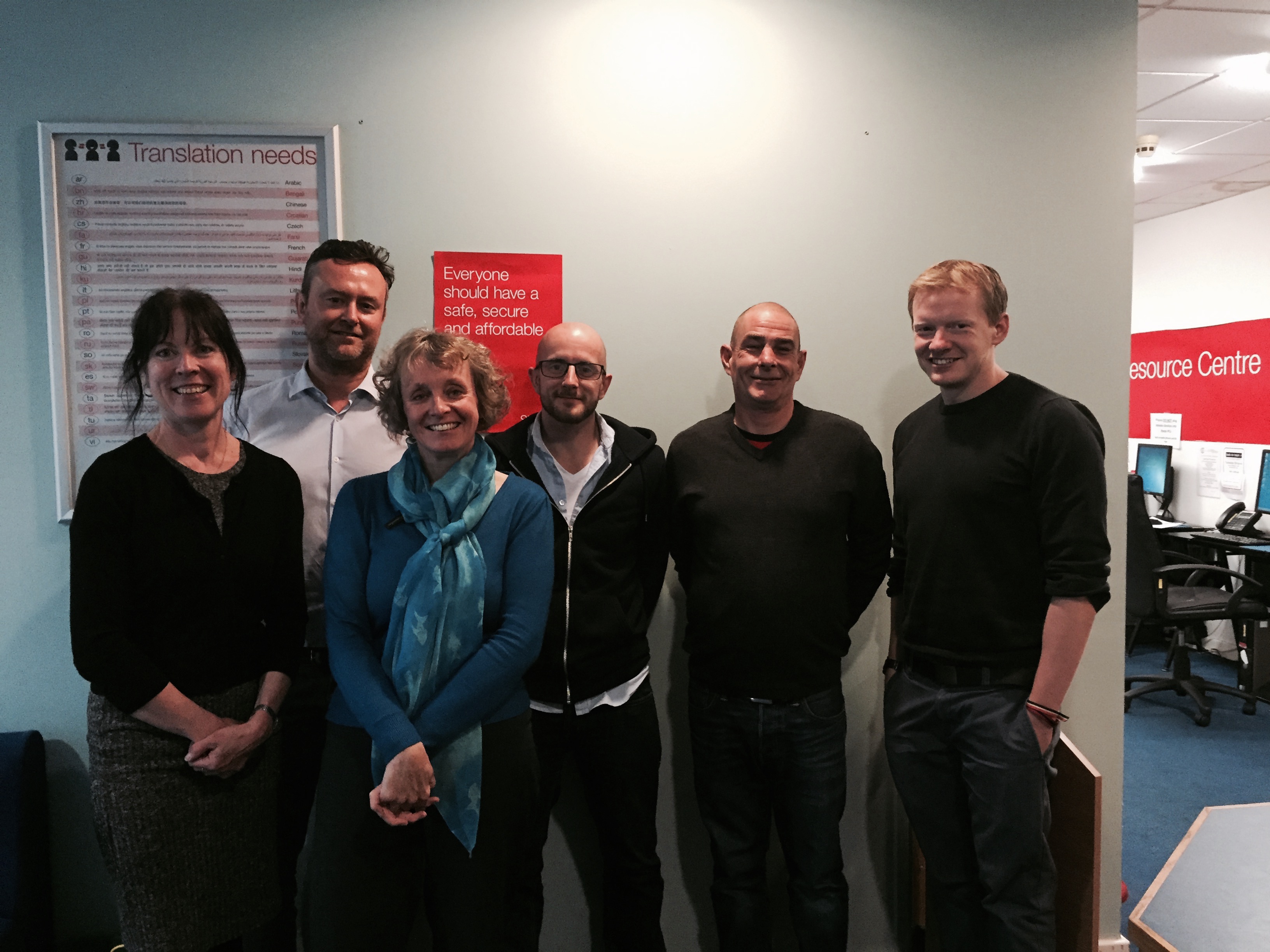
Inspiring Change Manchester, Shelter
The first agency I met with was Inspiring Change Manchester, Shelter. ICM provides a range of services for vulnerable people at risk of homelessness, including an advice phone line and legal help. They also have volunteers who have a pathway to peer mentoring and becoming a paid staff member. I had the opportunity to meet with Paul, Program Manager; Sarah, Development Manager; Mark, Hub Manager; Tom, a former offender and peer mentor now paid Program staff member and Rab, a long term former prisoner, now trainee with the ICM GROW program providing outreach services to hard to reach clients. The key messages from Tom and Rab are that all that happens across the whole service has input from service users; if you want to know certain things, go to the person with lived experience; the best advice comes from the person who has been through the problem and some people just need a bit of trust and faith after being told they are no good for years.
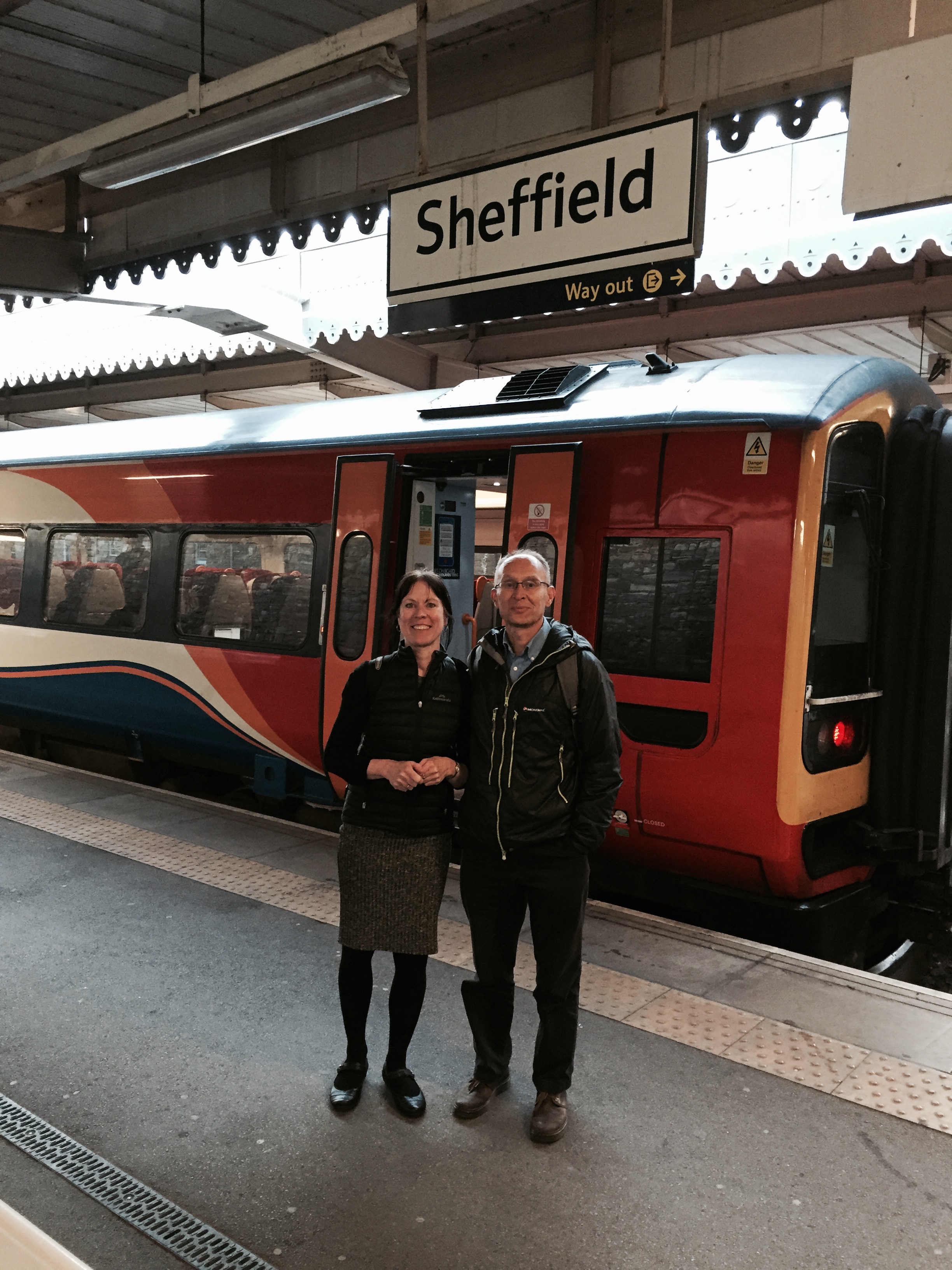
Professor D.R Fletcher, Sheffield Hallam University
That afternoon, I travelled to Sheffield to meet with Professor Del R Fletcher from Sheffield Hallam University, who has been doing offender related research including peer mentoring for many years. We had a great discussion and Del showed me around Sheffield giving me a great insight and appreciation of the economic downturn, austerity impacts, social issues and the changing political environment. Some key messages; increasing poverty and lack of social mobility sees offenders parked. due to the complexity of post release issues and convictions for employment services. Del is very supportive of peer mentoring and the ex-offender led organisations such as User Voice who have now become a growing lobby group for change. We just need to guard against prisoner peer mentors filling the gaps for prison officer staff cuts.
The following day I had an amazing experience with Merseyside Offender Mentoring Services (MOMs) visiting HMP Liverpool, one of the oldest operating prisons in England that now holds 1,300 men. Adam, Program Manager and Lyn, former offender, and MOM volunteer now employed MOM peer mentor took me around the prison and gave me the opportunity to speak at length with current prisoners who are peer mentors in the prison, assessing and referring every prisoner for assistance and services they need on admission. I also spoke with a lifer who is a drug treatment program graduate who now runs a prisoner group session. MOMS sees every prisoner on the day of their release to make sure they offer post release mentoring and other services to everyone being released. MOMS also receives referrals from Merseyside Police, one of their major supporters for offenders in the community who would benefit from peer mentoring. MOMS recently received an award from the Queen in recognition of their mentoring services. Some key messages from my talks with prisoners: peer mentoring works as prisoners do not want to talk to prison officers but will talk and open up with another prisoner; and rehabilitation does not occur in prison, it starts on the day of release, in the community, but the community offers no support.

Salford Unemployed Community Resource Centre Prison Project
I then went back to Manchester, to Eccles to meet with the Salford Unemployed and Community Resource Centre and speak to the founder and manager Alec, and Lee and Stu who manage the Prison Project. Lee a former offender said they are in effect ‘social workers for prisoners’ helping people in the local community involved in the criminal justice system manage and address any issues that arise, from just needing a bit of guidance to disaster recovery.

Community Led Initiatives, Manchester.
The next day was my final day in Manchester and a further highlight of my trip. I took the bus out to Moss Lane West and soon realised the socio economic disadvantage in the area with the ominous looking Probation Centre with shuttered windows. I soon found a gem of a team working within alongside the Probation Service. Community Led Initiatives (pictured above) – created by two former offenders Peter and Matt. CLC now services two locations, Tameside and Manchester and have supported hundreds of offenders in the community and or those with substance abuse issues. I had an amazing day with the team. Peter arranged for himself and Matt, their two employed Support Workers,Zahra and Simone, both former offenders and volunteers; Jamie, a current volunteer with a history of foster care and imprisonment and Jordan, a mentee, a young man not long out of prison, who has also had a history of foster care and youth detention to meet with me CLC work closely with Probation Services whom refer cases to them. While I was there, one of the Support Workers received a glowing email from a Probation Officer complimenting her on her good work supporting a hard to engage offender. We had a great day of discussion, heartfelt sharing of our life stories and experience of the criminal justice system and a few laughs and a great lunch. CLC and Peter have recently both received significant awards in recognition of their work. CLC is built and operates on the ethos of supporting the mentee and volunteer to achieve their potential and goals and if it suits to then become an employed member of staff. CLC aims to recruit all their positions from within.

The Cascade Foundation, Doncaster
My final day in England, took me to Doncaster to meet with Jackie, the founder of the Cascade Foundation and Lynne her personal assistant. It was a very special afternoon. Jackie and Lynne took me out to Barnsley where their first foundation house for ex offenders is based. I met with and had a great discussion with Dale, who was visiting the two guys living there to support them. Dale has been out of prison for 18 months after years of care when young and then prison. He now has a place of his own thanks to all the support from Jackie, Dale and the other guys view Jackie as their Mum and their angel. Jackie is Dyslexic and understands the impact of such learning difficulties on people and the life time impact this can have if not diagnosed and helped when young. Dale stopped being taught to read when he was four years old. The other two guys in the house had similar sad childhood backgrounds and then traumatic years of in and out of prison time. The Cascade Foundation a vital service also working on the ethos of prisoner helping prisoner and successful ex offender mentoring and supporting the vulnerable prisoner due for release and for as long as they need post release. Dale has been back into Doncaster prison to talk about his story that moves many and gains the attention of those with the power to make policy.
So now onto Scotland, where so many English agencies have said the Scottish are even more advanced. I can’t wait. Stay tuned.
 Claire Seppings